Mentoring
Individual guidance focused on your photography, your skills, and the work you want to create.
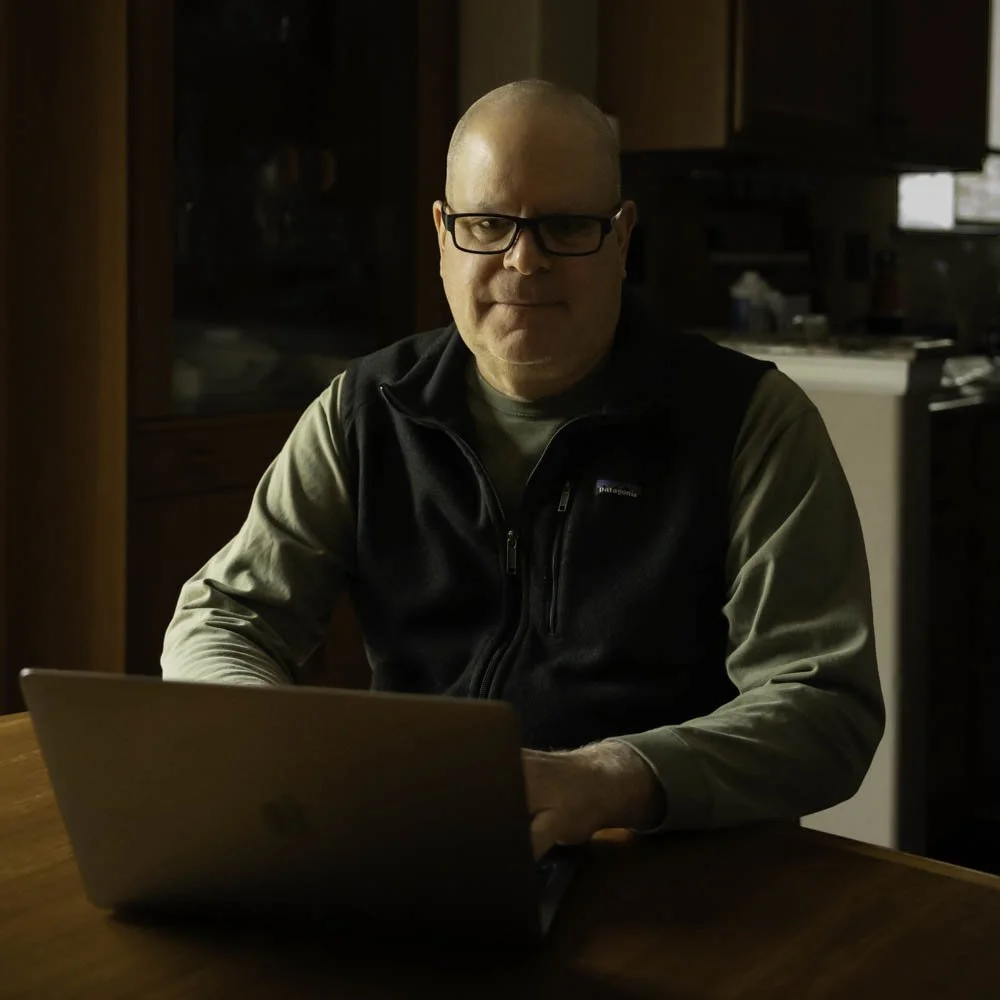
Classes are a good way to learn a new skill. Sometimes, however, the most useful next step is to work directly with someone who can look at your photographs, understand what you are trying to accomplish, and help you determine how to get there.
Individual mentoring provides that opportunity.
Rather than following a predefined class curriculum, mentoring sessions are built around your photographs, your questions, and the areas where you want to develop.
Work With Your Own Photographs
Mentoring starts with your images.
We can review finished photographs, work through images you are currently processing, discuss alternative approaches, or look at a larger body of work to identify patterns and opportunities for improvement.
The objective isn't for me to process your photographs for you. It is to help you understand the decisions involved so that you can make those decisions confidently in your own work.
That might mean exploring why an image isn't quite working, deciding where the viewer's attention should go, determining whether an adjustment should be global or local, or finding a better way to accomplish something you already know you want to do.
Develop Your Post-Processing Skills
Mentoring can focus on specific technical skills, including:
Tone and color
Layers
Selections and masks
Curves and other tonal adjustments
Dodging and burning
Black-and-white processing
Luminosity masking
Local adjustments
Sharpening and finishing
Preparing photographs for print or screen
We can also work with the software you use, including Photoshop, Lightroom Classic, and Affinity.
The emphasis remains on understanding the underlying skill rather than simply memorizing a sequence of commands.
Develop a Better Editing Process
Knowing how to use individual tools is only part of post-processing. Another challenge is knowing what to do, when to do it, and when the photograph is finished.
Mentoring can help you develop a more deliberate editing process.
We can examine how you approach an image from the initial RAW conversion through local adjustments and finishing. Along the way, we can identify unnecessary steps, explore alternative techniques, and develop a workflow that makes sense for the way you photograph.
The goal isn't to give you a rigid formula for processing every image. It is to help you develop a framework for making better decisions.
Work on a Project
Mentoring can also extend beyond individual photographs.
If you are developing a portfolio, photographic series, exhibition, book, zine, or personal project, our work can include image selection, sequencing, consistency of processing, presentation, and the relationship between individual photographs and the larger body of work.
This can be particularly useful when a project has moved beyond simply making more photographs and you need to begin deciding what belongs, what doesn't, and how the work fits together.
Learn at Your Level
You don't need to be an advanced photographer to benefit from mentoring.
A beginning photographer may want help establishing a sound editing workflow and understanding fundamental concepts.
A more experienced photographer may want to improve a particular technique, develop a more sophisticated approach to post-processing, or get an outside perspective on a body of work.
We start with what you already know and concentrate on what will be most useful to learn next.
How Mentoring Works
Mentoring sessions are conducted online using Zoom, allowing us to review photographs, share screens, demonstrate techniques, and work through images together.
A session can address a specific question or problem, or we can work together over multiple sessions toward a larger objective.
Before the first session, I'll ask you to provide some background about your photography, what you would like to work on, and a few representative images. That allows us to spend our time together working on the areas that will be most useful to you.
Start With a Conversation
If you're interested in mentoring, tell me a little about your photography and what you'd like to accomplish.
You don't need to know exactly what kind of instruction you need. That's something we can determine together.